Thinking Maps
Thinking maps has been a tool that I remember using all throughout school from my kinder years til now, I just don't think that I ever knew that it was called thinking maps. When I first looked at the Madeline Hunter lesson plan and say the thinking maps section it freaked me out because I was thinking that I had never heard of it before, but then I was calmed after Thursday's class of seeing that thinking maps were maps that have been used before, I was familiar with them, and that they really are awesome. I think how it stuck with me the most of the years is when I've had to learn compare and contrast and when I had to summarize or retell a story. After doing more research both with my class and on my own it was just amazing to see just how many different ways and different things that thinking maps are used for. I am excited to work with such a cool tool in the future. So far I think the bubble map is my favorite and the sequencing maps are my favorite. They are simple and well thought out.
Found on Pinterest, Pinned by Erin Miller

Photo by Tiffany Y Seltzer, found on Twitter
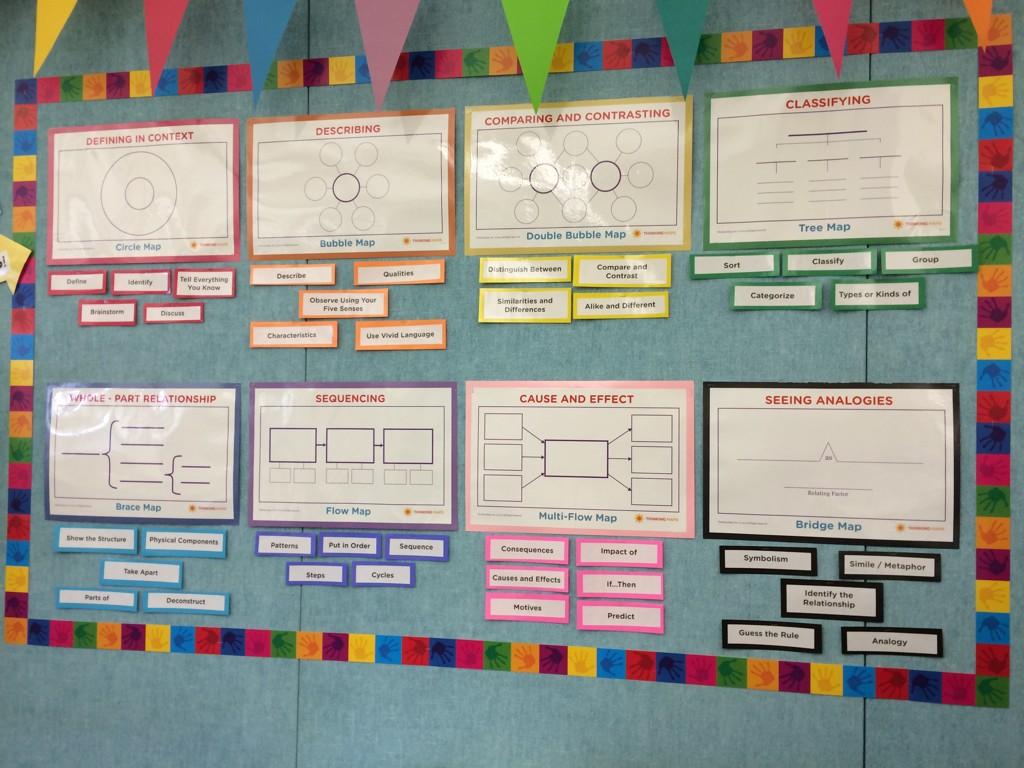


I also thought that I did not know what thinking maps were but realized that I actually did. I remember using the bubble maps and the brace maps. I really like the circle maps because I feel that there is a lot that can be done with them. I feel that all of the thinking maps can be used for any age level. The thinking maps allow teachers to use their imagination when it comes to the uses of these maps. I will be using these in my classroom because not only is it a new teaching styles but also it makes teaching easier and clearer. Great post and pictures.
ReplyDeleteKeep in mind that there are only * thinking* maps, the others are graphic organizers. The thinking maps I showed you are a unique group of maps.
ReplyDelete